
Doft Load Board & Truck Loads
Place Stars, Inc.Business
4.6205.00 Reviews
- Version
- 3.21.8
- Installs
- 100.00K
- Age Rating
- Everyone
Screenshots
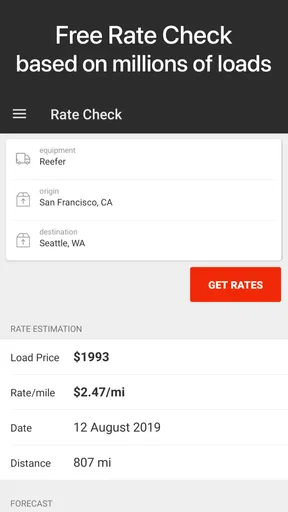
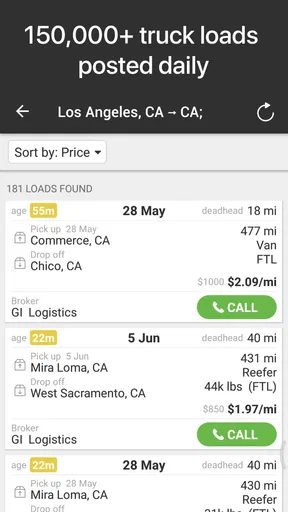
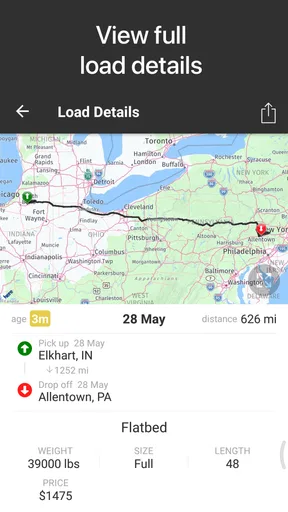
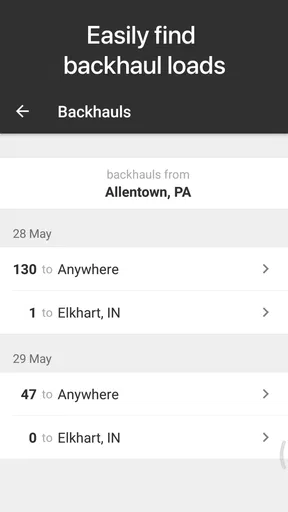
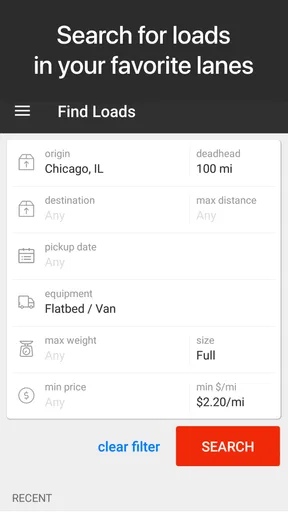
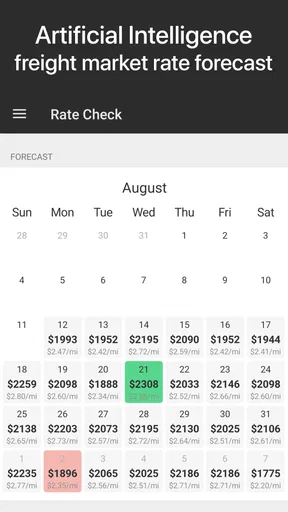
Our Review of Doft Load Board & Truck Loads
 Analysis by Appyee
Finding the next load is one of those jobs that can turn a productive driving day into a frustrating one. I reviewed Doft Load Board & Truck Loads as a business app for motor carriers and drivers, focusing on the practical question that matters most: does it help you spend less time searching and more time planning a workable haul? My impression is that it can be useful when you already know your equipment, route preferences, and operating costs, but it is not a magic replacement for careful freight checking.
The app is developed by Place Stars, Inc. and is available free of charge. That makes it easy to try without committing money just to see whether its load-board approach fits your workflow. It is rated for Everyone, so the basic audience is broad, although the actual usefulness is clearly aimed at people involved in commercial hauling rather than casual users. The app has passed the early-experiment stage too: it has more than a hundred thousand installs and an average rating of 4.6 from around 1.6 thousand ratings.
How the app fits into a real hauling workflow
At its core, this is a freight-search tool. The store summary describes it as a place to find loads and freight to haul, and that is the right way to think about it. It is not presented as a driving simulator, a general business planner, or a consumer delivery app. Its purpose is to put available hauling opportunities in front of motor carriers and drivers so they can decide which ones deserve a closer look.
That distinction matters because a load board is only one part of the decision. A listing may look attractive until you account for the empty miles needed to reach pickup, the return route, appointment timing, tolls, fuel, equipment requirements, and the possibility of waiting. I would use this app as an opportunity-finding layer, then verify the commercial details before treating any load as part of my schedule.
My preferred workflow would be to open the board before the next driving day, narrow the search around the area where the truck will actually become available, and compare several possibilities instead of accepting the first promising result. The useful habit is not simply finding a load; it is comparing the load against the position of the truck and the next likely destination.
For example, imagine finishing a delivery in the afternoon with an empty vehicle and wanting to avoid a long unpaid repositioning trip. I would search for freight near that destination, then look at whether the pickup direction supports the following day’s plan. A slightly lower-paying load may be the better business choice if it reduces deadhead distance or places the truck near a stronger freight area. The app can support that search, but the judgment remains mine.
What the free access means in practice
The free price is the clearest reason to test this app. I can install it and evaluate whether the available load-search experience is useful before deciding whether it belongs in my regular routine. For an independent driver or a small carrier watching overhead, that low initial commitment is important. A tool that is only occasionally useful is easier to justify when trying it does not require an upfront purchase.
There are also in-app purchases listed at prices ranging from $9.99 to $399.99 per item. I would not interpret that range as a reason to assume every user needs to pay, nor would I treat the free download as proof that every useful capability is permanently free. The sensible approach is to start with the no-cost access, identify which part of the workflow actually saves time, and examine any paid option carefully before buying.
This is where the app’s value needs a little discipline. A paid feature can be worthwhile for a carrier that uses the board every day, but the same purchase may make little sense for someone who only hauls occasionally or already receives freight through direct customers and established broker relationships. Because the purchase range is broad, I would judge an upgrade by the specific benefit shown at the point of purchase rather than by the price alone.
In other words, the free entry point gives the app a fair chance, while the paid layer should be evaluated as a business expense. I would ask whether it reduces repeated searching, improves the quality of opportunities I can act on, or helps keep a truck productive often enough to justify the cost. If the answer is only “it gives me another place to browse,” I would be cautious about spending more.
Where the app can deliver real value
The strongest value is convenience. Instead of relying only on phone calls, messages, personal contacts, or several disconnected sources, I can use a load board to create a more deliberate search process. That does not guarantee better freight, but it can make the first stage of planning faster and more organized.
It is particularly relevant when a truck is approaching an uncertain transition point. A driver may know the current delivery but not the next one. Searching early can reveal whether there are opportunities near the destination, whether the next move may require repositioning, and whether it is worth waiting for a better match. Even when I do not choose a listed load, seeing the available options can improve the decision about where to place the truck next.
A less obvious benefit is the ability to compare direction and timing rather than focusing only on the headline payout. I would keep a short mental checklist: where the truck ends up, how far it must travel empty, whether the pickup fits the driver’s hours, and whether the delivery leaves a useful next position. This turns the board from a scrolling list into a planning aid.
Another useful habit is to separate “interesting” from “actionable.” A load can appear suitable for the trailer but still fail because of appointment timing, pickup distance, or an inconvenient destination. I would save my attention for listings that fit the actual equipment and route plan, then confirm the details directly. This reduces the common load-board mistake of spending time negotiating something that was never operationally suitable.
The app also has value for smaller operators who do not have a large office team constantly watching freight. A solo driver may not have someone else searching while driving, and a small carrier may not want to maintain an expensive stack of tools. A mobile load-board option can give that operator a practical starting point for finding the next opportunity without pretending to replace dispatch experience.
The tradeoffs I would consider before relying on it
The first limitation is that a load board does not remove the need for verification. I would still check the shipper or broker details, commodity, weight, dimensions, pickup and delivery windows, payment terms, and any special equipment expectations before committing. Treating a listing as a complete contract would be risky, regardless of how convenient the search interface feels.
There is also a time-management tradeoff. More available freight can mean more decisions, not necessarily better decisions. If I repeatedly refresh searches without a clear route, minimum rate, or equipment filter in mind, the app could become a distraction. I get more value when I define my boundaries first: acceptable pickup radius, preferred direction, realistic appointment window, and the minimum economics needed for the move.
Another concern is that the best choice may not be the highest-paying listing. A load that sends the truck far away from the next useful market can create a poor follow-up position. Conversely, a short move may be worthwhile if it keeps the truck near home, supports a customer relationship, or avoids a costly empty return. The app can show opportunities, but it cannot know the full business context behind my next decision.
I would also avoid assuming that a mobile board alone is enough for a growing fleet. Once several trucks, drivers, and appointments are involved, the challenge becomes coordination as much as discovery. A dedicated dispatch process, direct shipper relationships, or a broader transportation-management setup may be better for an operation that needs centralized oversight. This app makes more sense as a focused freight-search tool than as an all-in-one back office.
The paid options create another tradeoff. Free access lowers the barrier to testing, but a purchase should be measured against actual use. A driver who checks loads several times a week may see clear value in a paid capability, while an occasional hauler may not recover the expense. I would avoid paying simply because an upgrade sounds more professional; I would first track whether the free workflow is already helping me find viable work.
Who is most likely to benefit
I think the best fit is an independent truck driver, owner-operator, or small motor carrier that needs another way to search for freight. The app is also worth considering for someone who frequently finishes a job without a confirmed next move. In that situation, a load board can provide a structured place to begin rather than forcing the driver to depend on one contact or one familiar route.
It may also suit a newer operator who is still learning how to compare loads. The app cannot teach every part of freight negotiation, but it can encourage a more active search habit. By comparing destination, timing, and equipment fit, a new carrier can start thinking beyond the advertised payout. I would still recommend learning the business side from experienced professionals, because a board is not a substitute for understanding contracts, operating costs, and risk.
The app is less compelling for a driver with a stable book of direct customers and little unused capacity. If nearly every trip is planned in advance, another source of available loads may add noise rather than value. It is also not the right primary tool for someone who wants route navigation, bookkeeping, maintenance tracking, or a complete fleet-management system. Those needs belong to different categories of software.
Compared with calling brokers manually, a load board offers faster browsing and a wider starting point, but calls can provide context that a listing may not. Compared with relying only on personal contacts, the app can expose opportunities outside an established network, though personal relationships may produce more dependable information. Compared with a full dispatch service, it gives me more control and potentially less dependence on another party, but it also leaves the research, verification, and negotiation work in my hands.
Practical tips for getting better results
I would begin by searching from the truck’s genuine availability point, not from an idealized location. The difference between “near the delivery” and “near where the driver can legally and realistically be ready” can change the economics of the entire move. I would then compare the total repositioning distance, not just the distance shown for the loaded trip.
Next, I would create a simple personal rule for reviewing listings. First check equipment fit, then pickup timing, then delivery direction, and only after that consider the pay. This order prevents an appealing number from dominating the decision before the basic operational details make sense.
A third useful tactic is to search before the current load is complete. Waiting until the truck is empty can leave fewer choices and create pressure to accept an unsuitable move. Starting early gives me time to compare alternatives, contact the relevant party, and decide whether a short empty move is justified. I would not book anything merely because it appeared early, but early visibility improves planning.
Finally, I would treat every paid option as something to test against a measurable routine. Before purchasing, I would note how often I use the board, how many viable opportunities it produces, and whether it saves meaningful time compared with my usual method. That is a better value test than assuming a higher-priced item must be more useful.
Device details and everyday usability
The current version is 3.21.8, and the app runs on Android 7.0 or later. That makes it accessible to people who are not using the newest phone, which is practical in a work environment where a device may be kept primarily for business tasks. I would still keep the app updated when possible, especially for a tool used around changing schedules and time-sensitive freight searches.
Its Everyone content rating is reassuring from a general accessibility standpoint, but the professional nature of the app means the real learning curve is operational rather than technical. Someone unfamiliar with freight terminology may need time to understand which listings fit their vehicle and business. An experienced carrier will probably get to the useful part faster because the important filters are already part of their daily thinking.
The app has been available since May 25, 2019, and its continued presence alongside its current version suggests an established product rather than a brand-new experiment. I would still judge it by current performance on my own phone and by whether the available freight is relevant to my lanes. Longevity can make an app worth trying, but it does not guarantee that every market or equipment type will find the same value.
Place Stars, Inc. is the developer behind it, and the app’s focus remains refreshingly specific: helping carriers and drivers look for loads. That focus is a strength when I need freight discovery, but it is also a reminder not to expect unrelated business functions from the same tool.
My buy-or-skip verdict
I would recommend trying Doft Load Board & Truck Loads if you are an owner-operator or small carrier who regularly needs to find the next haul. The free access makes the decision relatively straightforward: install it, search around your real operating area, and see whether the listings fit your equipment and schedule. Do not judge it by the number of results alone; judge it by how many opportunities survive a serious check of deadhead, timing, destination, and business value.
I would be more selective about the in-app purchases. Paid value can make sense for a frequent user whose workflow genuinely improves, but the listed purchase range reaches from $9.99 to $399.99 per item, so I would want a clear reason before spending. The right question is not whether the app is inexpensive in general. It is whether a particular purchase helps keep my truck moving or saves enough working time to justify itself.
I would skip it as a primary solution if my freight is already handled through dependable direct customers, or if I need a complete dispatch, accounting, navigation, or fleet-management platform. I would also skip relying on it blindly if I am unwilling to verify every important load detail myself. A board can open doors, but it cannot make a weak load profitable.
Overall, I see this Business app as a useful, low-risk starting point for freight discovery rather than a complete operating system for trucking. Its strongest case is the driver facing an empty truck, an uncertain next move, and a need to compare realistic options quickly. If that describes your work, the free entry point is worth testing. If it does not, the app may simply add another stream of listings to a process that already works well.
Verdict
Strengths of Doft Load Board & Truck Loads
- Easy access to available freight loads from a mobile device.
- Useful filters help narrow searches by route, equipment, and load type.
- Load details can support faster trip planning and decision-making.
- Helpful for carriers seeking additional opportunities between regular routes.
- A focused interface makes browsing freight listings relatively straightforward.
Limitations of Doft Load Board & Truck Loads
- Load availability may vary significantly by location and time of day.
- Some listings may require verification before accepting the shipment.
- New users may need time to understand industry-specific freight terms.
- Using the app effectively depends on accurate carrier and equipment details.
- Poor connectivity can make searching and reviewing loads less convenient.
Similar Picks in This Category
View All
LinkedIn: Community & Network
LinkedIn3.8

Zoom Workplace
zoom.com4.1

Microsoft Teams
Microsoft Corporation4.6

Meta Business Suite
Meta Platforms, Inc.4.6

Webex Meetings
Cisco Systems, Inc.4.5

TeamViewer Remote Control
TeamViewer4.4
Frequently Asked Questions
What is Doft Load Board & Truck Loads used for?
Doft Load Board & Truck Loads is designed for truck drivers, carriers, and freight professionals who need to find available loads and manage transportation opportunities. The app helps users browse freight listings, review important shipment details, and contact relevant parties. It can be useful for independent owner-operators as well as small and larger trucking businesses looking for new jobs.
Do I need an account to use Doft Load Board & Truck Loads?
Most useful features require creating and signing in to an account. Registration allows the platform to associate load searches, company information, and communication tools with your profile. Before downloading, carriers should be prepared to provide accurate business and contact details. Depending on the feature or market, additional verification may also be required before certain opportunities can be accessed.
What type of loads can I find in the app?
The available freight depends on the current listings and the locations you select, but the app is intended to help users discover a variety of trucking and transportation loads. Listings may include information such as pickup and delivery locations, dates, equipment requirements, and shipment details. Availability can change quickly, so users should review each posting carefully before accepting it.
Is Doft Load Board & Truck Loads free to download and use?
The app may be available to download without an upfront charge, but users should check the current pricing information in the Google Play Store or Apple App Store because access conditions can change. Some services, premium tools, or business features may require payment, a subscription, or separate arrangements. Always review the latest terms before relying on the app for regular operations.
Can I rely on the information in every load listing?
The app provides a convenient way to discover freight, but users should independently verify every important detail before committing to a load. Confirm the broker or shipper’s identity, payment terms, pickup and delivery requirements, equipment specifications, and any accessorial charges. Listings can change or become unavailable, and the app should be treated as a marketplace tool rather than a guarantee of payment or shipment accuracy.
